
A Tree Fell on Your Roof: What to Do First
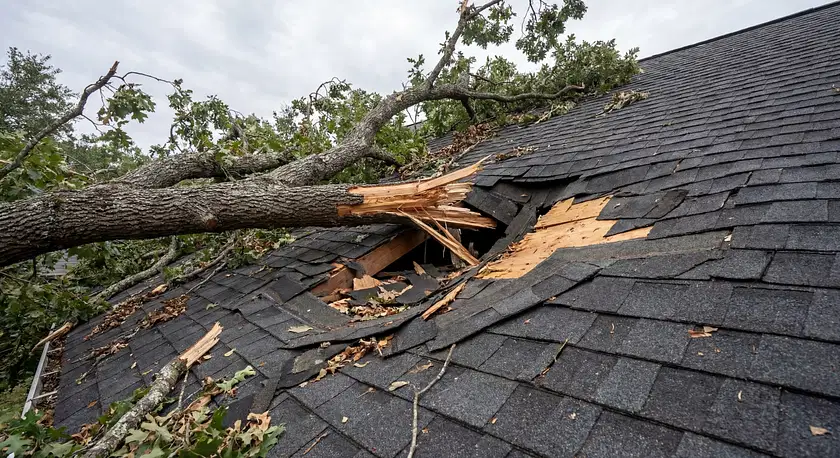
A fallen tree can turn a quiet afternoon into an urgent safety problem. If it has struck your home in Jefferson Parish, the first decisions are not about shingles or estimates. They are about getting everyone clear of danger, keeping water out if it is safe to do so, and documenting what happened. Here is a practical order of steps to follow, from the first few minutes through the roof inspection.
1. Get Everyone Away From the Damage
Move people and pets out of rooms beneath the impact. A ceiling that sags, cracks, or drops debris may signal damage you cannot see from below. If the tree has caused major structural damage, blocked a safe exit, or left the home unstable, leave the building and call 911. Do not reenter until emergency personnel say it is safe.
Treat any wire caught in the tree or lying nearby as live. Stay well away, keep others back, and call the utility company or 911. Do not touch the tree, a fence, or standing water near a downed line. If water is reaching lights, outlets, or the electrical panel, avoid the area; only shut off power if you can reach the main switch without entering a wet or damaged space.
Even when the impact looks minor, do not climb onto the roof or pull branches loose. A limb may be holding weight under tension, and damaged decking may not support you. Wait for qualified professionals to assess it.
2. Record the Damage and Start the Insurance Conversation
Once you are safely outside, take photos and video from the ground. Capture the entire home, the tree, the point of impact, fallen branches, and any visible interior leaks. Note when the damage occurred and save weather alerts or other relevant records. Make a list of damaged belongings, but do not enter an unsafe room just to photograph them.
Call your homeowners insurer or agent promptly to ask how to open a claim, what documentation they need, and how they want you to handle urgent protective work. Coverage for a fallen tree depends on the cause of the damage and your policy’s terms, exclusions, and deductible. Do not assume every repair or tree-removal cost will be covered. Keep receipts for reasonable steps taken to prevent further damage, and ask before discarding damaged materials if possible. Our guide to navigating roof insurance claims after a storm explains what to organize before an adjuster’s visit.
If a contractor offers to waive your deductible, guarantees an insurance payout, or pressures you to sign before explaining the work, slow down. You should be able to review a written scope and ask questions.
3. Keep Water Out Without Taking Roof Risks
Rain can enter through a hole, lifted shingles, or damage around a roof penetration long after the tree stops moving. If it is safe inside, move valuables away from drips, place containers under leaks, and photograph affected ceilings and walls. Avoid touching a bulging ceiling; water and debris may be trapped above it.
Arrange for a qualified tree-removal professional to assess how to remove the tree safely. Where its weight or branches prevent access, tree removal and roof work may need to be coordinated. A roofer can then evaluate the opening and whether emergency tarping is appropriate. A properly secured tarp is a temporary barrier, not a repair, and it may not be possible to install one until the tree and electrical hazards are cleared. For more on what a temporary cover can and cannot do, see why emergency roof tarping prevents costly damage.
Ask when protective work can begin, especially if more rain is forecast. Weather, access, and crew availability can affect timing, so a clear plan matters more than a promise no one can safely keep.
4. Decide What the Roof Actually Needs
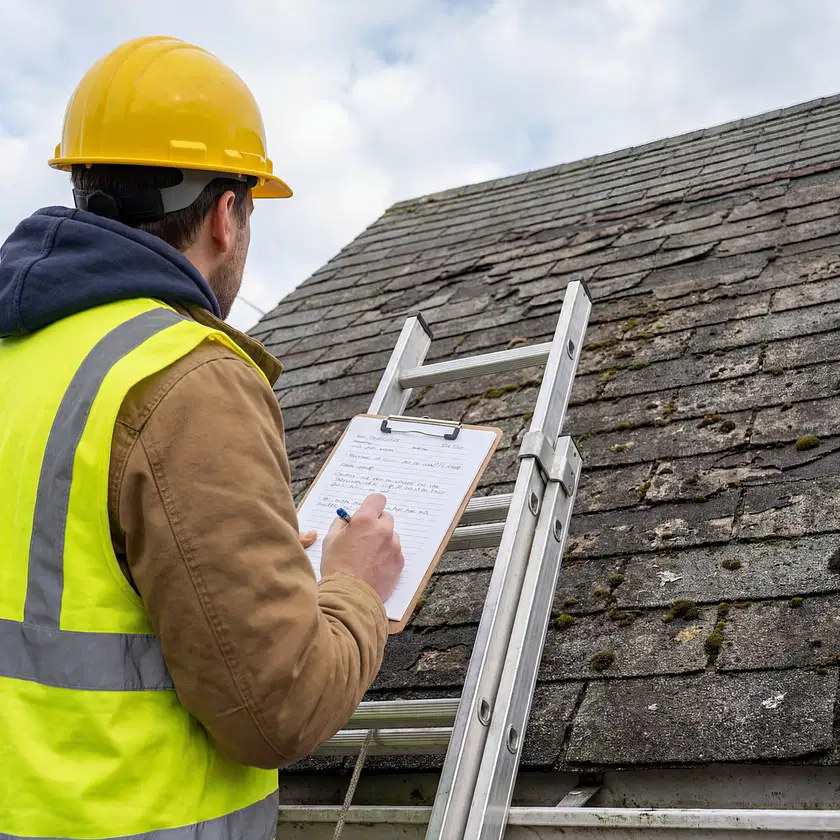
Repairing roof damage from fallen tree limbs is not always a matter of replacing the shingles you can see from the yard. The inspection should look for punctured decking, damaged underlayment, cracked vents or flashing, and displaced shingles beyond the impact point. Water may have traveled before appearing on an interior ceiling. A good written estimate identifies the affected areas, proposed materials, and any work that cannot be confirmed until damaged roofing is opened.
A localized impact on an otherwise sound roof may call for roof repairs. A large opening, widespread damage, or an aging roof with multiple weak areas may make a roof replacement worth discussing. A tree strike does not automatically mean the whole roof must be replaced. The age and condition of the roof, the extent of hidden damage, and what your insurer approves are separate questions. Our repair-versus-replacement guide can help you prepare for that conversation.
Ask prospective contractors for proof of insurance, applicable licensing or registration, recent references, and written warranty terms. Confirm who will handle permits when required and how the crew will protect your property. Drone images or digital measurements can help document hard-to-see areas, but they should support—not replace—a thorough assessment when physical access is safe.
A Safer Path From Impact to Repair
After a tree hits your roof, put safety first, document what you can from a distance, contact your insurer, and arrange qualified help to remove hazards and limit water intrusion. Then review the inspection findings and a written scope before committing to permanent work.
HD Roofing and Construction helps homeowners in Mandeville plan the next step, whether that means emergency tarping, residential roofing, Roof Repairs, or Roof Replacements. Contact us or call 985-259-6143 to discuss the damage and request an assessment. If anyone is in immediate danger, call 911 first.